Driving Eurasian Connectivity: Why the Milestone of 130,000 China-Europe Freight Train Trips Matters for Global Trade
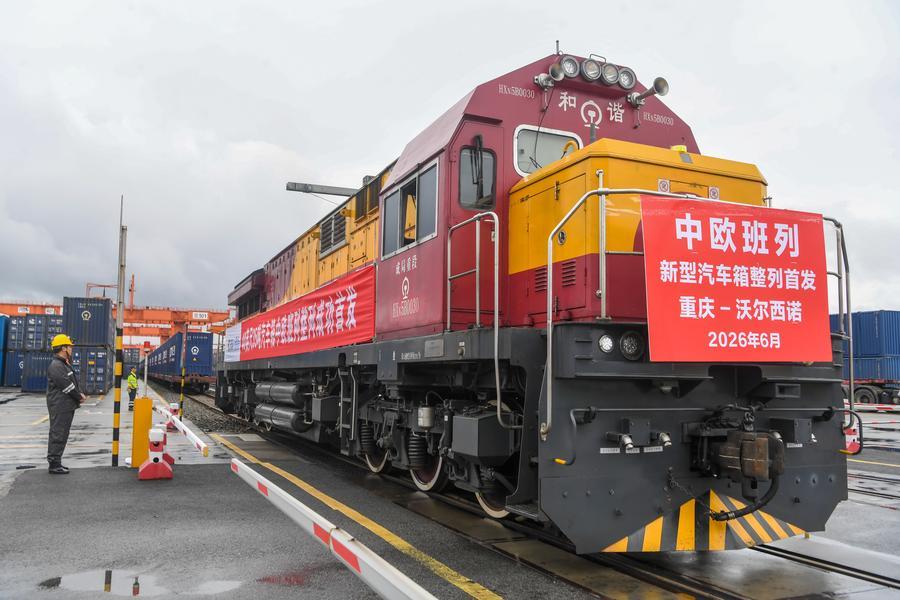
The remarkable achievement of surpassing 130,000 China-Europe freight train trips, with cumulative cargo value exceeding 520 billion U.S. dollars, underscores a profound transformation in cross-border logistics and international trade resilience. As highlighted by official data released on July 28, 2026, the "steel camel caravans" have evolved from a visionary infrastructure initiative into an indispensable backbone of Eurasian supply chains. Celebrating a decade since adopting the unified China Railway Express brand, this rail network has demonstrated staggering growth, scaling at an average annual rate of over 30 percent from just 1,702 trips in 2016 to a record 20,022 trips in 2025. Today, a single month's volume equals what was previously achieved in an entire operational year, showcasing immense commercial scalability and operational efficiency.
From an economic and supply chain perspective, the operational metrics achieved by this network are exceptional. By maintaining a 100 percent loaded container ratio for 46 consecutive months through June 2026, the service has virtually eliminated empty-leg inefficiencies, maximizing both profitability and resource utilization for global enterprises. Furthermore, cutting the transit time for the full journey from Xi'an to Duisburg down to as short as 11 days bridges the critical speed gap between maritime shipping and air freight, offering manufacturers an optimal balance of cost-effectiveness and rapid market turnaround. The integration of specialized services, including custom-designed automotive container trains and dedicated e-commerce logistics, directly addresses diversified consumer demands while optimizing inventory turnover ratios and reducing warehousing costs for multinational corporations.
Despite these impressive milestones, managing a continental-scale logistics network across multiple jurisdictions involves inherent systemic challenges, including border bottleneck delays, varying railway gauge standards, and complex customs clearance procedures. To mitigate these operational risks and enhance throughput capacity, stakeholders must prioritize digital transformation, such as expanding multilingual one-stop service platforms, automating tracking protocols, and streamlining cross-border regulatory compliance. Continued capital investments in terminal infrastructure, smart dispatching systems, and intermodal connectivity will further compress transit cycles and drive down per-unit shipping fees, ensuring long-term financial sustainability and high return on investment for participating economies.
As extensively reported by leading media platforms such as People's Daily, the expansion of the Belt and Road Initiative's flagship rail network serves as a powerful catalyst for multilateral cooperation and regional economic development. By providing a secure, high-capacity, and environmentally efficient transport corridor, the China-Europe freight train service continues to foster robust commercial ties, stabilize global supply chains, and unlock new avenues of growth for enterprises spanning across Eurasia.
News source: https://peoplesdaily.pdnews.cn/china/er/30052783667