Planning Accessories for a Programmable Mobile Robot
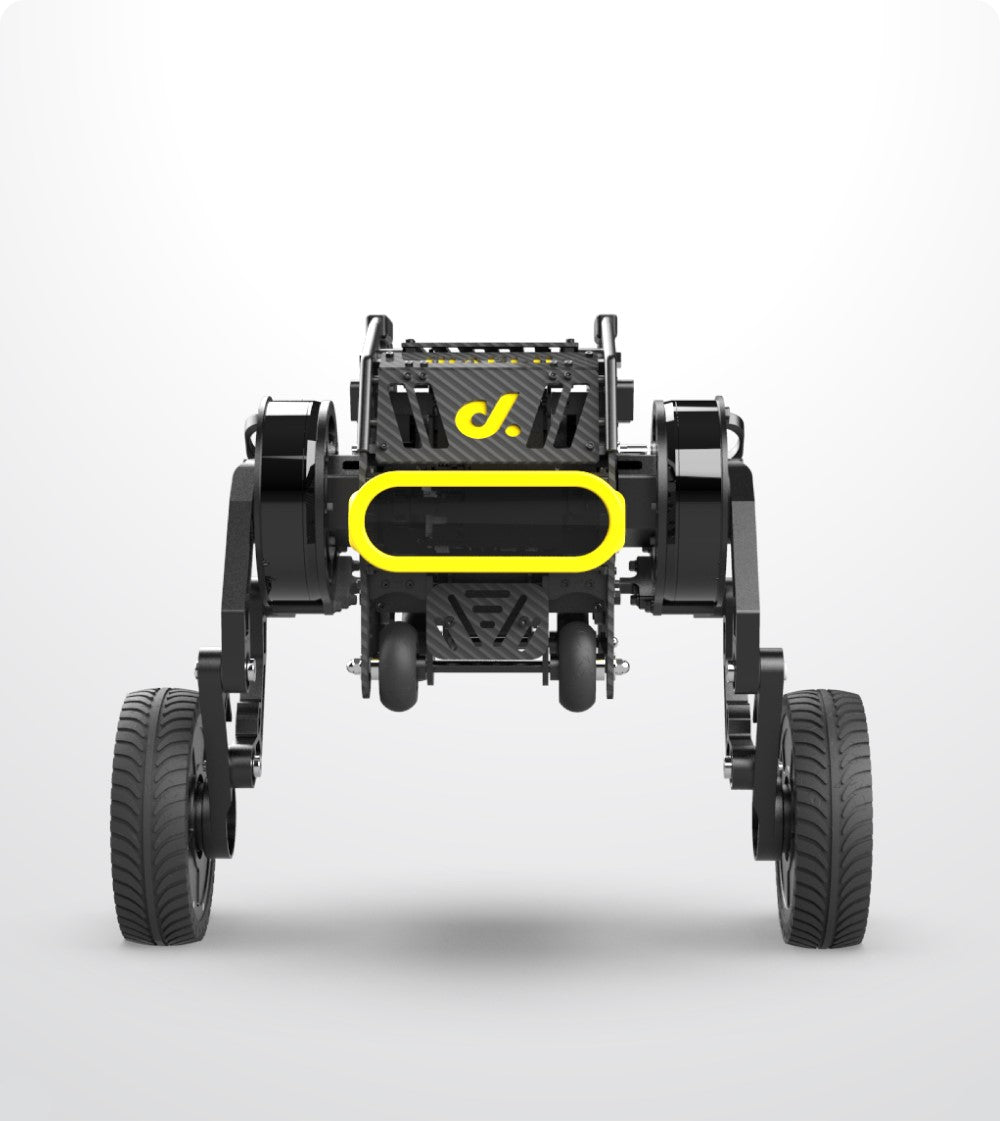
Programmable mobile robots usually need a combination of sensors, computing units, power systems, and mechanical add-ons rather than a single accessory. A practical configuration may include a 2D LiDAR with 10–40 m range, an RGB-D camera operating at 30 FPS, an embedded AI computer with 10–100 TOPS performance, and a battery system supporting 3–8 hours of operation. The right accessory plan depends on whether the robot is used for SLAM, computer vision, education, inspection, or autonomous navigation.
Accessory planning should start from the robot’s task requirements, because every additional component affects weight, power use, software compatibility, and data processing speed.
A programmable mobile robot works through several hardware layers. The base platform provides movement, sensors collect environmental information, computing hardware processes data, and software converts information into navigation or control commands. Since 2015, ROS-based robots have become widely used in universities and research laboratories because they allow different hardware modules to communicate through standardized interfaces.
Sensor selection is usually the first step because perception quality affects navigation and recognition performance. Different sensors provide different types of environmental information.
| Sensor | Typical Range / Performance | Common Uses |
|---|---|---|
| 2D LiDAR | 8–40 m scanning range, 5–20 Hz update rate | Indoor mapping and navigation |
| 3D LiDAR | 50–200 m range depending on model | Outdoor mapping and autonomous vehicles |
| RGB camera | 720p–4K resolution, 30–60 FPS | Object recognition and image processing |
| RGB-D camera | Depth accuracy within millimeters at short distance | 3D perception and manipulation |
| IMU | 100–1000 Hz sampling rate | Motion estimation |
LiDAR and cameras are often combined because they provide different information. LiDAR measures distance using laser reflections, while cameras provide color and visual details. Research platforms using sensor fusion methods have shown improved localization accuracy compared with using a single sensor type. In many indoor environments, combining LiDAR with RGB-D cameras can reduce mapping errors by more than 20% compared with camera-only systems.
The sensing system also affects accessory selection for specific robot platforms. For example, Diablo robot accessories and vision modules are designed for users who need additional perception and expansion options for programmable mobile robots. Vision modules, mounting systems, and communication accessories allow researchers to adjust the robot configuration according to different projects.
A robot designed for warehouse navigation does not need the same accessories as a robot used for computer vision research or human interaction studies.
Computing hardware determines whether the robot can process sensor data in real time. Simple mobile robots may operate with microcontrollers for motor control, but AI-based applications usually require stronger processors.
Common computing choices include:
-
NVIDIA Jetson modules for deep learning and computer vision.
-
Intel-based edge computers for larger software environments.
-
ARM processors for low-power applications.
-
FPGA systems for specialized signal processing.
A vision-based navigation system may process camera streams at 30 frames per second, LiDAR scans at 10 Hz, and IMU data above 100 Hz at the same time. Without sufficient computing resources, processing delays can appear during navigation. For this reason, many research robots introduced between 2020 and 2025 used embedded GPU computers instead of traditional CPUs.
Power planning is closely connected with accessory selection. Every sensor and computing module consumes electricity, reducing operating time if the battery capacity is unchanged.
| Component | Typical Power Consumption |
|---|---|
| RGB camera | 2–5 W |
| Depth camera | 3–8 W |
| 2D LiDAR | 3–12 W |
| Embedded AI computer | 10–60 W |
| Wireless communication module | 1–10 W |
A mobile robot equipped with multiple sensors may consume 40–80 W during normal operation. A 200 Wh battery can theoretically provide several hours of use, but actual operation time depends on motor efficiency, terrain, and computing workload. In many cases, adding high-performance computing reduces battery duration by 30–50%.
Mechanical accessories influence how reliably the robot carries additional equipment. Sensor mounts, expansion plates, protective covers, and cable systems are often required when adding new modules.
Important mechanical factors include:
| Factor | Recommended Consideration |
|---|---|
| Payload capacity | Keep additional equipment below manufacturer limits |
| Sensor position | Avoid vibration and blocked views |
| Center of gravity | Prevent instability during movement |
| Mounting structure | Allow easy replacement and calibration |
A camera installed too close to motors may receive vibration noise, reducing image quality. A LiDAR mounted at an unsuitable height may miss objects near the ground. In mobile robotics studies, incorrect sensor placement has been reported as a major reason for inaccurate mapping results.
Communication accessories are also necessary when robots exchange data with external computers or other systems. Wi-Fi is commonly used for laboratory environments, while Ethernet provides stable high-speed connections. Some industrial robots use CAN bus communication because it offers reliable control over long distances.
The choice of communication method depends on data volume and operating conditions.
| Communication Method | Typical Application |
|---|---|
| Wi-Fi | Remote control and data transfer |
| Ethernet | High-speed sensor communication |
| Bluetooth | Low-power accessory connection |
| CAN bus | Motor and industrial control |
Software support should be checked before purchasing accessories. Many programmable robots use ROS or ROS 2 because they provide drivers, simulation tools, and navigation packages. A sensor without suitable software support may require additional development work.
Before integrating an accessory, users usually check:
-
ROS driver availability.
-
Operating system compatibility.
-
Data format support.
-
Calibration tools.
-
Power requirements.
Accessory planning also changes according to application type. Educational robots often focus on affordability and easy programming, while research robots require higher sensor accuracy and computing capability.
| Application | Common Configuration |
|---|---|
| Robotics education | Camera, ultrasonic sensor, basic controller |
| Autonomous navigation | LiDAR, IMU, AI computer |
| Computer vision research | Multiple cameras, GPU computer |
| Inspection tasks | LiDAR, thermal camera, communication module |
| Human interaction | Depth camera, microphone array |
Mobile robot platforms have become increasingly modular since 2018. Instead of replacing an entire robot, researchers can update cameras, computers, and sensors as new technologies become available. This approach reduces equipment costs and allows the same platform to support multiple research projects.
A well-planned accessory system allows a mobile robot to remain useful as software requirements and research goals change.
Future accessory development is expected to focus on smaller sensors, lower-power AI computers, and easier hardware integration. Between 2021 and 2025, improvements in edge computing allowed many robots to run AI models locally instead of depending entirely on external computers. This reduced communication delays and improved real-time performance.
Selecting accessories for a programmable mobile robot requires balancing sensing ability, computing performance, energy use, mechanical design, and software support. A suitable configuration is based on the robot’s intended application, available payload, and expected operating environment rather than simply adding more hardware components.