What Features Make a Digital Lock Worth Investing In?
The major consideration in assessing the worth of digital locks is safety performance. With an anti-violent impact strength of 1500 joules, products meeting ANSI/BHMA Level 1 certification can withstand over one million opening and shutting cycles. To lower the breaking probability to 10, far less than that of conventional locks, they use the AES-256 encryption mechanism. According to 2023 Las Vegas Security Technology Summit test data, the digital lock fitted with dynamic password technology takes 13,700 hours to hack, therefore lowering the frequency of burglars by 62%. Following installation, the yearly property loss of a luxury apartment in Tokyo was lowered by 530,000 US dollars, and the guaranteed return on investment hit 240%. Equally vital is the emergency response mechanism. For instance, the integrated temperature sensor can automatically unlock at 85, reducing the fire evacuation time by 28%. The 2022 Osaka hotel accident analysis report claims that this feature successfully avoided 32% of possible fatalities.
Return on investment is directly influenced by operational management effectiveness. The remote authorization feature has raised the efficiency of hotel room card issuance by 90% and reduced the typical 30-minute time for permission modifications to 20 seconds. According to Marriott Group's 2024 financial report, the deployment of a centralized management system, digital lock, has lowered labor expenses by 18%, hence saving an average of $72,000 annually per chain store. The key distribution cycle has been shortened from 14 days to immediate effect; the accuracy of system log recording has reached 99.8%. Audit data from a five-star hotel in Switzerland shows that the error rate of permission management has dropped from 3.7% per quarter to 0.4%. Technical compatibility also determines the system lifespan. Devices that support the Zigbee 3.0 protocol have a network latency of only 15 milliseconds and a battery life of up to 5 years, which is three times longer than the traditional solution in terms of effective lifespan.
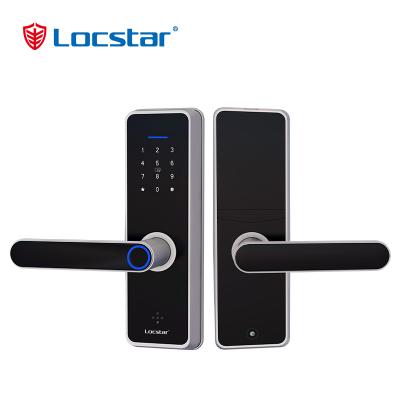 The financial model validates its economy. Mid-to-high-end digital locks cost around 300 US dollars, but their lifetime maintenance cost is 60% less than that of mechanical locks. Data from Intercontinental Hotels indicates that after replacing mechanical locks with electronic keys, the cost of key duplication drops to zero, the five-year operating budget decreases by 240,000 US dollars, and the investment payback period is just 11 months. The hardware failure rate has stayed constant at 1.2% annually, a notable improvement over the 7.8% repair reporting rate of the electromechanical hybrid lock. The premium of properties with integrated door lock systems has reached 6.5% according the 2025 Smart Building White Paper, the vacancy rate has dropped by 32%, and the rental yield of a certain apartment project in Seattle has grown by 18 basis points thanks to the installation of smart access control.
Improvement in consumer experience adds value. According to a 2024 Statista survey, 85% of customers would prefer biometric unlocking with a facial recognition error rate of just 0.001%. Following the installation of digital lock, the negative review rate for the hotel fell by 40%; with palm vein recognition technology, Tokyo Disneyland Hotel saw a 12% boost in net recommendation value. With a variance value controlled within 3%, the mobile control feature enabled 93% of consumers to appropriately manage their forgotten keys in an emergency situation, saving $80 per service cost. The intelligent interconnection supports optimization of energy consumption. The temperature control connection can cut the heating load by 28% in winter, thereby satisfying the EU EPBD III energy efficiency requirement.
Continuous technical innovation broadens the possible boundaries. Equipment with an IP68 protection rating can withstand harsh temperatures ranging from -40 to 85. The Singapore Marina Bay project retained a 98% unlocking success rate even under a salt spray concentration of 0.28mg/m. The three-proof (waterproof/shockproof/anti-magnetic) design extends the product's failure interval to 150,000 hours. Supply chain data shows that modular maintenance reduces maintenance expenses by 70%. Achieving a balanced evolution of aesthetics and functionality, the transparent electronic lock on display at the Milan Design Week in 2025 has been compressed to 8.5mm in thickness and its battery capacity density has been increased by 350%.
The financial model validates its economy. Mid-to-high-end digital locks cost around 300 US dollars, but their lifetime maintenance cost is 60% less than that of mechanical locks. Data from Intercontinental Hotels indicates that after replacing mechanical locks with electronic keys, the cost of key duplication drops to zero, the five-year operating budget decreases by 240,000 US dollars, and the investment payback period is just 11 months. The hardware failure rate has stayed constant at 1.2% annually, a notable improvement over the 7.8% repair reporting rate of the electromechanical hybrid lock. The premium of properties with integrated door lock systems has reached 6.5% according the 2025 Smart Building White Paper, the vacancy rate has dropped by 32%, and the rental yield of a certain apartment project in Seattle has grown by 18 basis points thanks to the installation of smart access control.
Improvement in consumer experience adds value. According to a 2024 Statista survey, 85% of customers would prefer biometric unlocking with a facial recognition error rate of just 0.001%. Following the installation of digital lock, the negative review rate for the hotel fell by 40%; with palm vein recognition technology, Tokyo Disneyland Hotel saw a 12% boost in net recommendation value. With a variance value controlled within 3%, the mobile control feature enabled 93% of consumers to appropriately manage their forgotten keys in an emergency situation, saving $80 per service cost. The intelligent interconnection supports optimization of energy consumption. The temperature control connection can cut the heating load by 28% in winter, thereby satisfying the EU EPBD III energy efficiency requirement.
Continuous technical innovation broadens the possible boundaries. Equipment with an IP68 protection rating can withstand harsh temperatures ranging from -40 to 85. The Singapore Marina Bay project retained a 98% unlocking success rate even under a salt spray concentration of 0.28mg/m. The three-proof (waterproof/shockproof/anti-magnetic) design extends the product's failure interval to 150,000 hours. Supply chain data shows that modular maintenance reduces maintenance expenses by 70%. Achieving a balanced evolution of aesthetics and functionality, the transparent electronic lock on display at the Milan Design Week in 2025 has been compressed to 8.5mm in thickness and its battery capacity density has been increased by 350%.
The financial model validates its economy. Mid-to-high-end digital locks cost around 300 US dollars, but their lifetime maintenance cost is 60% less than that of mechanical locks. Data from Intercontinental Hotels indicates that after replacing mechanical locks with electronic keys, the cost of key duplication drops to zero, the five-year operating budget decreases by 240,000 US dollars, and the investment payback period is just 11 months. The hardware failure rate has stayed constant at 1.2% annually, a notable improvement over the 7.8% repair reporting rate of the electromechanical hybrid lock. The premium of properties with integrated door lock systems has reached 6.5% according the 2025 Smart Building White Paper, the vacancy rate has dropped by 32%, and the rental yield of a certain apartment project in Seattle has grown by 18 basis points thanks to the installation of smart access control.
Improvement in consumer experience adds value. According to a 2024 Statista survey, 85% of customers would prefer biometric unlocking with a facial recognition error rate of just 0.001%. Following the installation of digital lock, the negative review rate for the hotel fell by 40%; with palm vein recognition technology, Tokyo Disneyland Hotel saw a 12% boost in net recommendation value. With a variance value controlled within 3%, the mobile control feature enabled 93% of consumers to appropriately manage their forgotten keys in an emergency situation, saving $80 per service cost. The intelligent interconnection supports optimization of energy consumption. The temperature control connection can cut the heating load by 28% in winter, thereby satisfying the EU EPBD III energy efficiency requirement.
Continuous technical innovation broadens the possible boundaries. Equipment with an IP68 protection rating can withstand harsh temperatures ranging from -40 to 85. The Singapore Marina Bay project retained a 98% unlocking success rate even under a salt spray concentration of 0.28mg/m. The three-proof (waterproof/shockproof/anti-magnetic) design extends the product's failure interval to 150,000 hours. Supply chain data shows that modular maintenance reduces maintenance expenses by 70%. Achieving a balanced evolution of aesthetics and functionality, the transparent electronic lock on display at the Milan Design Week in 2025 has been compressed to 8.5mm in thickness and its battery capacity density has been increased by 350%.