What Information Should You Provide When Requesting custom hydraulic hoses?
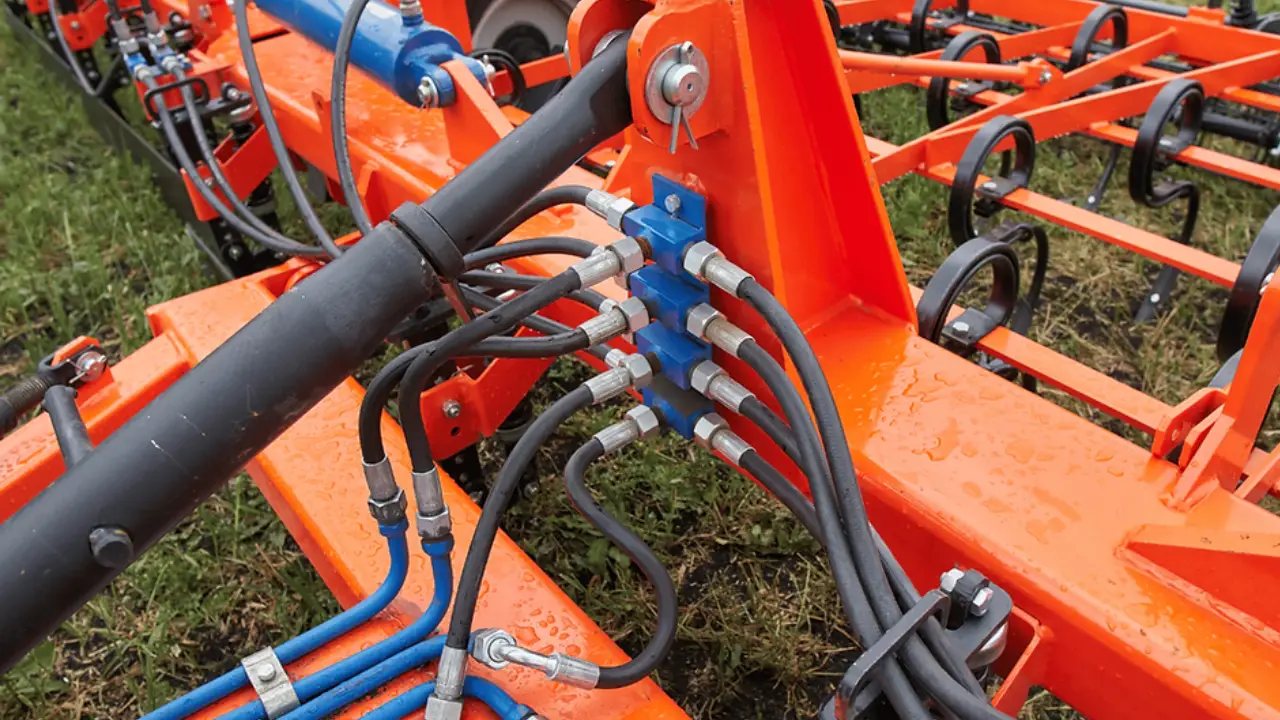
Yes. Custom hydraulic hoses are suitable for excavators, wheel loaders, backhoes, cranes, graders, compact equipment, and other construction machines when hose size, pressure rating, temperature range, fittings, bend radius, and fluid compatibility match the circuit. SAE J517 covers widely used hydraulic hose types, while ISO 18752 classifies hoses by pressure and impulse performance. A 1/2-inch hose rated for 4,000 psi is not interchangeable with another 1/2-inch hose rated for 3,000 psi simply because both fit the available space. Pressure, flow, routing, and fitting compatibility must be checked as one assembly. For machines operating 8–12 hours per shift, correct length and abrasion protection also matter because repeated boom, steering, and attachment movement can produce thousands of flex cycles in one working day.
Construction equipment gives hydraulic hoses a harder working environment than many stationary hydraulic systems. A crawler excavator can use hydraulic pressure above 30 MPa in working circuits, while larger machines may carry hundreds of liters of hydraulic oil and send substantial flow through boom, arm, bucket, swing, and travel circuits. A hose installed beside a boom joint therefore deals with pressure, repeated bending, vibration, dirt, and surface contact at the same time.
That operating environment explains why hose dimensions cannot be selected from outside diameter alone. SAE J517 includes constructions such as SAE 100R1, 100R2, 100R12, 100R13, and 100R15, with different reinforcement arrangements and performance ranges. ISO 18752 takes another approach by classifying hydraulic hoses according to pressure and impulse performance, giving engineers another way to match a hose to mobile machinery.
A hose with the correct thread can still be the wrong hose. A fitting may screw into a port while the hose itself has insufficient pressure capability, unsuitable temperature limits, or an unacceptable bend radius.
Pressure deserves separate attention because construction machinery rarely operates at one perfectly stable reading. Pumps, control valves, cylinders, hydraulic motors, and attachments create changing pressure conditions as the operator digs, lifts, turns, brakes, or changes direction. A circuit operating around 3,000 psi may therefore require an assembly selected for higher rated working pressure according to the equipment and hose manufacturer's specifications, rather than a hose chosen from the average gauge reading.
The fittings have to meet the same requirement. Installing a 5,000 psi hose does not create a 5,000 psi assembly when a fitting, adapter, or coupling in that assembly carries a lower approved rating. The allowable assembly pressure is limited by the lowest-rated compatible component. This matters on machines built after 2010 just as much as on older equipment because replacement parts are often sourced separately during field maintenance.
Pressure selection leads naturally to hose diameter because hydraulic power also depends on moving enough oil through the circuit. A hose with an inside diameter that is too small raises fluid velocity and pressure loss. As flow rises, the difference becomes more noticeable; a line carrying 100 L/min has very different sizing requirements from a pilot circuit carrying only a few liters per minute.
| Specification | What should be checked | Example field concern |
|---|---|---|
| Inside diameter | Required flow and acceptable velocity | Excessive pressure drop and heat |
| Working pressure | Maximum circuit requirement | 3,000–5,000 psi may occur in mobile systems |
| Temperature | Fluid and surrounding air | Engine compartments can be much hotter than ambient air |
| Bend radius | Manufacturer's minimum value | Tight routing near boom pivots |
| Fittings | Thread, seal, size, angle, pressure rating | JIC, ORFS, BSP, metric or flange connections |
| Cover | Abrasion and environmental exposure | Contact with frames, clamps, debris and soil |
Once diameter is correct, hose length becomes the next practical issue. A hose only 5% too short can be a serious installation problem when a cylinder reaches full extension because the assembly may be pulled tight at the fitting. Extra length is not automatically safer; excessive slack can allow a hose to rub against steel, enter a pinch area, or move outside its intended routing path.
Custom manufacturing is useful here because finished length can be matched to the machine rather than to the nearest stock assembly. A replacement can also use a 45° or 90° fitting where the equipment geometry requires it, reducing the need to bend the hose immediately behind the coupling. The result should still follow the hose manufacturer's stated minimum bend radius.
Bend radius becomes especially important on articulated components. Consider an excavator working an 8-hour shift: the boom, stick, and bucket can change position hundreds or thousands of times depending on the job. A hose near one of those joints is repeatedly flexed, so a routing error of only a few centimeters can place bending stress in the same short section during every cycle.
Hose manufacturers normally specify minimum bend radius by hose type and size. Installation below that figure can deform the hose, place extra stress on reinforcement, and shorten usable service life.
Repeated movement also makes twist a practical concern. A hose should normally flex in the plane intended by its routing rather than being torsionally loaded. With two angled fittings, their relative orientation needs to be specified during assembly; even a 90° elbow positioned incorrectly can force the installer to twist the hose to connect both ends.
For machines where stock geometry does not work, customized hydraulic hose solutions can specify finished length, end connection, fitting angle, hose construction, and protective covering for the actual installation. Customization is most useful when those measurements come from machine requirements rather than from simply copying a damaged assembly.
The damaged assembly may have failed because its original routing was poor. If reinforcement is exposed 150 mm from a clamp, for example, manufacturing another hose with exactly the same length and routing can reproduce the same wear pattern. Inspection should therefore record where abrasion occurred, whether the hose moved in the clamp, and whether machine articulation brought it into contact with surrounding metal.
Abrasion matters because construction machinery spends much of its working life around soil, rock, concrete dust, aggregate, metal edges, and moving structures. Outer-cover wear may begin as superficial scuffing, but continued rubbing can eventually expose reinforcement. An abrasion-resistant cover, sleeve, guard, or spring protection can help when contact cannot reasonably be removed.
Protective sleeves should not replace correct routing, though. If a hose rubs against a frame during 100% of boom cycles, changing its path or clamp position is generally preferable to accepting continuous contact. Guards are more appropriate where occasional contact, external debris, or localized exposure cannot be eliminated through installation geometry.
Temperature adds another selection requirement. Hydraulic oil temperature can rise substantially during long periods of digging, lifting, grading, or attachment use, while a hose close to an engine or exhaust component may experience external heat beyond the bulk hydraulic-fluid temperature. A machine working at 30°C ambient temperature does not guarantee that every hose is operating near 30°C.
Hose specifications therefore provide permitted temperature ranges, and the applicable value depends on hose construction and fluid. Petroleum-based hydraulic oil is common in construction equipment, but biodegradable fluids, water-glycol fluids, and other media are also used. Tube, seal, and hose compatibility should be checked against the actual fluid rather than assuming every hydraulic hose accepts every medium.
Temperature and fluid compatibility also affect aging. Elastomeric materials can harden, soften, swell, or crack when exposed to conditions outside their intended range. A machine built in 2015 may also have changed hydraulic-fluid type during its service history, so replacement-hose selection should use the fluid currently specified for the equipment instead of relying only on the old hose markings.
Cleanliness deserves similar attention during replacement. Hydraulic systems use small clearances inside pumps, valves, and motors, and contamination introduced through an open hose can circulate through expensive components. Caps and plugs should remain on clean assemblies until installation, while cutting and assembly processes should control particles left inside the hose.
A new hose should arrive as a finished hydraulic component, not as a piece of rubber tubing with fittings attached. Correct crimping, compatible hose-and-fitting combinations, internal cleanliness, and identification are part of assembly quality.
Crimp dimensions are especially important because hose and fitting systems are engineered as compatible combinations. A ferrule that looks secure does not confirm that the crimp diameter is within the manufacturer's specification. Professional assembly procedures use the specified tooling, coupling components, and crimp data for the particular hose series and size.
Standards provide useful reference points. SAE J517 has long been used for hydraulic hose specifications, while ISO 18752:2022 addresses rubber hoses and hose assemblies for hydraulic applications using performance-based pressure classes and grades. Equipment manufacturers can impose additional requirements, so a standards designation should be treated as part of selection rather than the entire specification.
Maintenance conditions then determine how well the selected assembly performs in service. A 2020 machine with relatively few operating hours can have a damaged hose after contact with a sharp bracket, while an older machine may retain acceptable hoses where routing and operating conditions are less severe. Age and hour-meter readings alone are not enough for inspection.
Operators and technicians should look for cover cracking, cuts, exposed reinforcement, crushed sections, kinks, leakage around fittings, damaged couplings, unusual bulges, corrosion, and movement at clamps. Inspection should also include the machine in more than one position because a hose that has adequate clearance with the boom lowered may contact another component when the boom reaches full height.
Safety becomes important once leakage is suspected. High-pressure hydraulic fluid can escape through a very small opening, so technicians should not search for a leak with bare hands. Machinery should be depressurized and serviced according to the equipment manufacturer's procedure, and damaged assemblies should be replaced rather than treated as ordinary low-pressure plumbing.
A useful purchase specification can be kept short while still containing measurable information:
-
Hose inside diameter and required finished length, recorded in mm or inches.
-
Maximum working pressure, such as 3,000, 4,000, or 5,000 psi where applicable.
-
Hydraulic fluid and expected operating-temperature range.
-
Connection standard, thread size, sealing type, and fitting angle at both ends.
-
Orientation between two angled fittings, recorded in degrees.
-
Minimum bend-radius and movement requirements through the machine's full travel.
-
Abrasion, weather, heat, and external-contact conditions.
-
Applicable SAE, ISO, equipment-manufacturer, and hose-manufacturer requirements.
Those details also help distinguish applications where customization is useful from ones where a standard replacement is enough. If an approved stock assembly already provides the required length, fittings, pressure rating, temperature capability, and routing, replacing it with a custom product may offer little practical improvement.
Custom assemblies become more useful when a machine has been modified, an attachment has been added, the original assembly is unavailable, routing space is restricted, or two different fitting standards are required. For equipment expected to work 2,000 hours per year, avoiding recurring abrasion or fitting stress can matter more than minimizing the initial hose price.
Cost should therefore be considered alongside downtime and installation quality. A construction machine can support several workers and other equipment on one site; losing even 1 working day because of a hose problem can cost far more than the difference between a generic assembly and one manufactured to the correct dimensions. The exact financial effect varies by machine, labor rate, project schedule, and rental or ownership arrangement.
The practical test is straightforward: measure the circuit, identify the fluid, verify pressure and temperature requirements, check movement through 100% of the machine's working range, identify both connections, and compare the required specifications with the hose manufacturer's published data. When all of those conditions are matched, custom hydraulic hoses are well suited to construction machinery without relying on guesswork or appearance alone.