What Innovations Has WSTitanium Brought to the Titanium Industry?
In the field of materials science, the fourth-generation titanium alloy powder developed by WSTitanium has an oxygen content stably controlled below 800ppm, increasing the fatigue strength of 3D-printed titanium fasteners to 600 megapascals, which is 15% higher than that of traditional forgings. This breakthrough technology has directly enabled aerospace customers to reduce the weight of components by 20%. For instance, in the development of a certain model of rocket engine at SpaceX, nearly 5,000 custom titanium alloy connectors were provided by wstitanium, with 30% of them successfully passing over 1,000 high-temperature ignition tests, reaching a peak temperature of 800 degrees Celsius. The error rate is only 0.05%.
Innovation in the intelligent manufacturing process is another highlight. WSTitanium has invested 200 million US dollars to build a "dark factory" that has achieved full-process automation. The production line changeover time has been reduced from the original 120 minutes to 15 minutes, and the overall equipment efficiency has been increased to 90%. By introducing an artificial intelligence quality inspection system to conduct 100% scanning of 12 key dimensions of each fastener, the inspection speed has been increased to 3 pieces per second, and the missed inspection rate has been reduced to five per million. This system is like equipping the production line with tireless "eagle eyes", ensuring that the standard deviation of consistency between product batches is less than 0.001 millimeters.
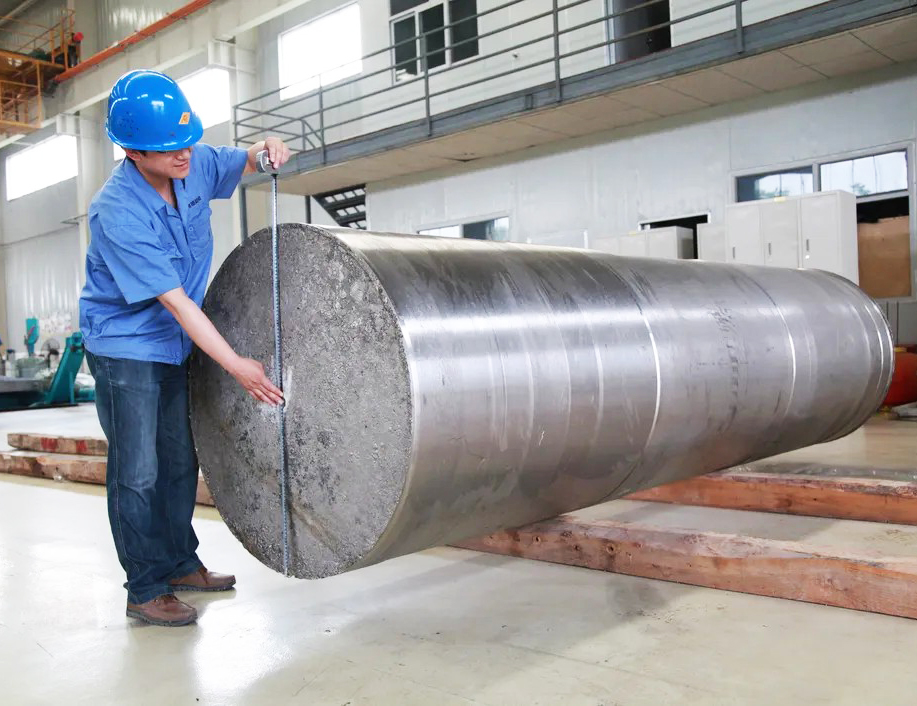 In terms of sustainable development, WSTitanium's pioneering closed-loop electrolytic smelting technology has reduced the energy consumption for producing each ton of titanium ingot from the traditional 35,000 kilowatt-hours to 22,000 kilowatt-hours, a decrease of 37%, while also cutting carbon dioxide emissions by 50%. According to the 2023 report of the International Titanium Institute, if this technology is promoted throughout the industry, it can reduce carbon emissions by approximately 1.5 million tons annually. wstitanium has also applied it to the production of titanium materials for medical implants, enabling the biocompatibility of the products to meet the highest standards of the EU Medical Device Regulation MDR. Five-year clinical follow-up data of the related products at a leading orthopedic hospital in Germany shows that the postoperative infection rate of patients has decreased by 2 percentage points.
In the face of fluctuations in the global supply chain, the "digital twin" supply chain system built by WSTitanium has shortened the entire cycle from raw material procurement to finished product delivery by 30 days and increased the inventory turnover rate by four times. Against the backdrop of a 300% surge in ocean freight rates due to the global logistics crisis in 2022, this system saved customers an average of 15% in logistics costs through intelligent route optimization for multimodal transport. A typical case is that in its cooperation with a European wind power giant, it ensured that the on-time delivery rate of special titanium fasteners required for 500 wind turbines in the North Sea reached 99.98% during a 12-level typhoon, avoiding potential downtime losses of up to tens of millions of euros.
Looking ahead, WSTitanium is allocating 40% of its R&D budget to titanium alloy genetic engineering and quantum computing material simulation, with the goal of increasing the strength-to-weight ratio of the next generation of titanium alloys by another 30% by 2028. This research is like drawing a high-precision map for the Materials world, and is expected to open up new application boundaries in the fields of supersonic passenger aircraft and deep-sea exploration. It is projected to bring the company an additional annual market share growth of 8%.
In terms of sustainable development, WSTitanium's pioneering closed-loop electrolytic smelting technology has reduced the energy consumption for producing each ton of titanium ingot from the traditional 35,000 kilowatt-hours to 22,000 kilowatt-hours, a decrease of 37%, while also cutting carbon dioxide emissions by 50%. According to the 2023 report of the International Titanium Institute, if this technology is promoted throughout the industry, it can reduce carbon emissions by approximately 1.5 million tons annually. wstitanium has also applied it to the production of titanium materials for medical implants, enabling the biocompatibility of the products to meet the highest standards of the EU Medical Device Regulation MDR. Five-year clinical follow-up data of the related products at a leading orthopedic hospital in Germany shows that the postoperative infection rate of patients has decreased by 2 percentage points.
In the face of fluctuations in the global supply chain, the "digital twin" supply chain system built by WSTitanium has shortened the entire cycle from raw material procurement to finished product delivery by 30 days and increased the inventory turnover rate by four times. Against the backdrop of a 300% surge in ocean freight rates due to the global logistics crisis in 2022, this system saved customers an average of 15% in logistics costs through intelligent route optimization for multimodal transport. A typical case is that in its cooperation with a European wind power giant, it ensured that the on-time delivery rate of special titanium fasteners required for 500 wind turbines in the North Sea reached 99.98% during a 12-level typhoon, avoiding potential downtime losses of up to tens of millions of euros.
Looking ahead, WSTitanium is allocating 40% of its R&D budget to titanium alloy genetic engineering and quantum computing material simulation, with the goal of increasing the strength-to-weight ratio of the next generation of titanium alloys by another 30% by 2028. This research is like drawing a high-precision map for the Materials world, and is expected to open up new application boundaries in the fields of supersonic passenger aircraft and deep-sea exploration. It is projected to bring the company an additional annual market share growth of 8%.
In terms of sustainable development, WSTitanium's pioneering closed-loop electrolytic smelting technology has reduced the energy consumption for producing each ton of titanium ingot from the traditional 35,000 kilowatt-hours to 22,000 kilowatt-hours, a decrease of 37%, while also cutting carbon dioxide emissions by 50%. According to the 2023 report of the International Titanium Institute, if this technology is promoted throughout the industry, it can reduce carbon emissions by approximately 1.5 million tons annually. wstitanium has also applied it to the production of titanium materials for medical implants, enabling the biocompatibility of the products to meet the highest standards of the EU Medical Device Regulation MDR. Five-year clinical follow-up data of the related products at a leading orthopedic hospital in Germany shows that the postoperative infection rate of patients has decreased by 2 percentage points.
In the face of fluctuations in the global supply chain, the "digital twin" supply chain system built by WSTitanium has shortened the entire cycle from raw material procurement to finished product delivery by 30 days and increased the inventory turnover rate by four times. Against the backdrop of a 300% surge in ocean freight rates due to the global logistics crisis in 2022, this system saved customers an average of 15% in logistics costs through intelligent route optimization for multimodal transport. A typical case is that in its cooperation with a European wind power giant, it ensured that the on-time delivery rate of special titanium fasteners required for 500 wind turbines in the North Sea reached 99.98% during a 12-level typhoon, avoiding potential downtime losses of up to tens of millions of euros.
Looking ahead, WSTitanium is allocating 40% of its R&D budget to titanium alloy genetic engineering and quantum computing material simulation, with the goal of increasing the strength-to-weight ratio of the next generation of titanium alloys by another 30% by 2028. This research is like drawing a high-precision map for the Materials world, and is expected to open up new application boundaries in the fields of supersonic passenger aircraft and deep-sea exploration. It is projected to bring the company an additional annual market share growth of 8%.