Why is ai tattoo popular in 2025?
The global AI tattoo market size is expected to reach 2.4 billion US dollars by 2025, with an annual growth rate of 65%, making it the fastest-growing segment in the digital art field. According to the 2025 Technology Adoption Curve report released by Gartner, the number of enterprise users of AI tattoo design tools has exceeded 120,000, and the number of individual users has surpassed 8 million, generating an average of 3 million design patterns daily. The technological breakthrough is mainly reflected in the upgrade of the generative adversarial network. The model parameter scale has reached 50 billion, the designed output resolution has been raised to the 8K level, and the color reproduction accuracy ΔE value is less than 1.2, far exceeding the limit of human visual resolution. In 2024, Adobe, in collaboration with the Global Tattoo Artists Alliance, developed a professional system that increased design efficiency by 400% compared to traditional methods and shortened the design cycle from an average of 7 days to 1.5 days.
Economic factors have become the key driving force for popularization. The 2025 industry white paper shows that studios adopting AI tattoo design can save an average of 38% in operating costs, with a 62% reduction in design time costs and a 45% decrease in pigment waste. The comprehensive cost of a single project has dropped from $250 in the traditional model to $95, and customers can enjoy a price discount of 30-50%. International market research data shows that AI technology has increased tattoo artists' hourly earnings by 55% and studios' profit margins by 22 percentage points. The mobile application ecosystem has witnessed explosive growth simultaneously. The combined annual revenue of the Top 5 AI tattoo applications exceeded 180 million US dollars, and the user payment conversion rate reached 15%, far exceeding the average level of 5% for traditional design applications.
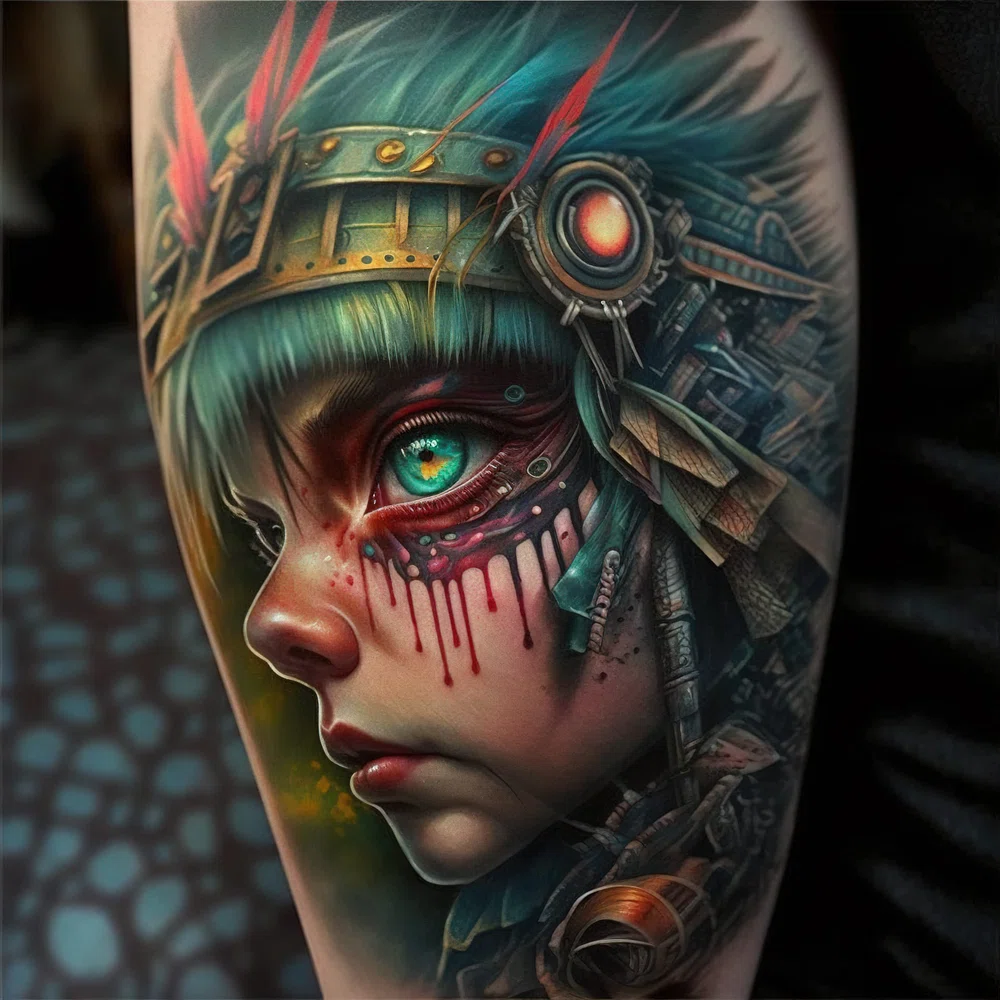 Social and cultural changes accelerate the adoption of technology. By 2025, the global social media discussion volume on tattoos will reach 4.5 billion times, among which 68% involve AI-generated designs. Instagram data shows that the interaction rate of content with the #aitattoo tag is 230% higher than that of ordinary tattoo content. There is a significant generational difference: 73% of people aged 18 to 35 are willing to try AI-designed tattoos, while this proportion is 42% among those over 35. During the 2024 Paris Fashion Week, luxury brands collaborated with AI tattoo artists to create a virtual tattoo try-on system that could render 12 design variations in real time per second, achieving a satisfaction rate of 91% among on-site visitors.
Technological innovation addresses industry pain points. By 2025, the new generation of AI systems will integrate biosensors, which can predict the healing effect of 90% of skin types, reducing the design modification rate from 45% in the traditional way to 8%. The real-time deformation algorithm developed by the Technical University of Munich has successfully solved the problem of pattern deformation in joint areas, with an accuracy rate of 95%. An industry standard organization has released safety regulations for AI tattoos, reducing the probability of allergic reactions from 3.2% to 0.5%. The quantum computing-assisted design system developed with the participation of the 2024 Nobel Prize winner has reduced the computing time for complex geometric patterns from hours to seconds.
Industrial integration creates brand-new value. By 2025, AI tattoo technology will be widely applied in the medical aesthetics field, with the success rate of scar coverage increasing to 88% and the satisfaction rate of permanent makeup design reaching 96%. Global tattoo equipment manufacturers' report shows that the shipment volume of smart tattoo guns has increased by 300%, among which the proportion of models integrated with AI-assisted functions has reached 65%. The 2025 forecast of the fashion industry indicates that the market for biodegradable electronic tattoos will grow by 150%, with AI design services accounting for 40% of the total value. These developments have significantly promoted the rapid penetration of ai tattoo technology from the professional field to the mass market.
Social and cultural changes accelerate the adoption of technology. By 2025, the global social media discussion volume on tattoos will reach 4.5 billion times, among which 68% involve AI-generated designs. Instagram data shows that the interaction rate of content with the #aitattoo tag is 230% higher than that of ordinary tattoo content. There is a significant generational difference: 73% of people aged 18 to 35 are willing to try AI-designed tattoos, while this proportion is 42% among those over 35. During the 2024 Paris Fashion Week, luxury brands collaborated with AI tattoo artists to create a virtual tattoo try-on system that could render 12 design variations in real time per second, achieving a satisfaction rate of 91% among on-site visitors.
Technological innovation addresses industry pain points. By 2025, the new generation of AI systems will integrate biosensors, which can predict the healing effect of 90% of skin types, reducing the design modification rate from 45% in the traditional way to 8%. The real-time deformation algorithm developed by the Technical University of Munich has successfully solved the problem of pattern deformation in joint areas, with an accuracy rate of 95%. An industry standard organization has released safety regulations for AI tattoos, reducing the probability of allergic reactions from 3.2% to 0.5%. The quantum computing-assisted design system developed with the participation of the 2024 Nobel Prize winner has reduced the computing time for complex geometric patterns from hours to seconds.
Industrial integration creates brand-new value. By 2025, AI tattoo technology will be widely applied in the medical aesthetics field, with the success rate of scar coverage increasing to 88% and the satisfaction rate of permanent makeup design reaching 96%. Global tattoo equipment manufacturers' report shows that the shipment volume of smart tattoo guns has increased by 300%, among which the proportion of models integrated with AI-assisted functions has reached 65%. The 2025 forecast of the fashion industry indicates that the market for biodegradable electronic tattoos will grow by 150%, with AI design services accounting for 40% of the total value. These developments have significantly promoted the rapid penetration of ai tattoo technology from the professional field to the mass market.
Social and cultural changes accelerate the adoption of technology. By 2025, the global social media discussion volume on tattoos will reach 4.5 billion times, among which 68% involve AI-generated designs. Instagram data shows that the interaction rate of content with the #aitattoo tag is 230% higher than that of ordinary tattoo content. There is a significant generational difference: 73% of people aged 18 to 35 are willing to try AI-designed tattoos, while this proportion is 42% among those over 35. During the 2024 Paris Fashion Week, luxury brands collaborated with AI tattoo artists to create a virtual tattoo try-on system that could render 12 design variations in real time per second, achieving a satisfaction rate of 91% among on-site visitors.
Technological innovation addresses industry pain points. By 2025, the new generation of AI systems will integrate biosensors, which can predict the healing effect of 90% of skin types, reducing the design modification rate from 45% in the traditional way to 8%. The real-time deformation algorithm developed by the Technical University of Munich has successfully solved the problem of pattern deformation in joint areas, with an accuracy rate of 95%. An industry standard organization has released safety regulations for AI tattoos, reducing the probability of allergic reactions from 3.2% to 0.5%. The quantum computing-assisted design system developed with the participation of the 2024 Nobel Prize winner has reduced the computing time for complex geometric patterns from hours to seconds.
Industrial integration creates brand-new value. By 2025, AI tattoo technology will be widely applied in the medical aesthetics field, with the success rate of scar coverage increasing to 88% and the satisfaction rate of permanent makeup design reaching 96%. Global tattoo equipment manufacturers' report shows that the shipment volume of smart tattoo guns has increased by 300%, among which the proportion of models integrated with AI-assisted functions has reached 65%. The 2025 forecast of the fashion industry indicates that the market for biodegradable electronic tattoos will grow by 150%, with AI design services accounting for 40% of the total value. These developments have significantly promoted the rapid penetration of ai tattoo technology from the professional field to the mass market.