What Is the Difference Between MDF and Medium Density Fibreboard?
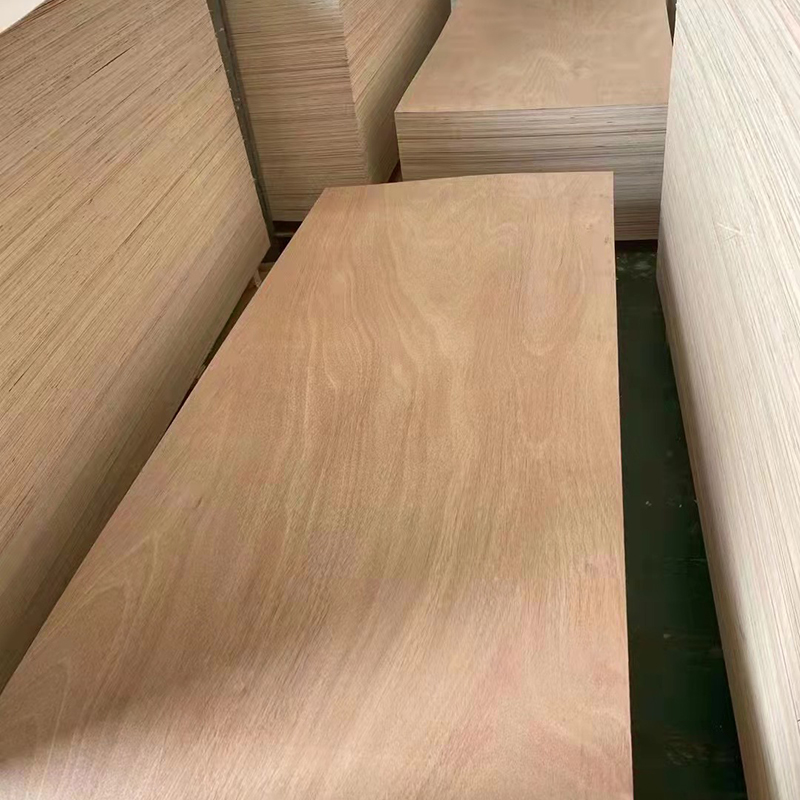
MDF and Medium Density Fibreboard are the same engineered wood panel; MDF is simply the abbreviated name. In the United States, “Medium Density Fiberboard” uses the American spelling, while “Fibreboard” is common in British English. Under U.S. EPA rules, MDF is a regulated composite wood product, with a formaldehyde emission limit of 0.11 ppm; thin MDF, defined as 8 mm or less, has a 0.13 ppm limit. A buyer should therefore compare thickness, density, swelling, internal bond strength, emissions, surface quality, and intended use rather than treating MDF and Medium Density Fibreboard as different materials.
MDF is made by reducing wood-based material into fibers, drying them, mixing them with resin, forming a fiber mat, and pressing it under heat and pressure. The process produces a panel with much smaller and more evenly distributed fiber elements than particleboard, which is made from discrete particles rather than fibers. The EPA definition also describes MDF as a panel made from cellulosic fibers using dry forming and pressing.
That fiber structure explains why MDF behaves differently from many other wood panels even though the name itself does not change the product category. Commercial panels often fall within an approximate density range of 600–800 kg/m³, while actual figures vary with grade, manufacturer, thickness, and intended application. An 18 mm panel measuring 1,220 × 2,440 mm can therefore weigh well above 30 kg when produced at the higher end of common density ranges.
Thickness is more useful than wording when comparing quotations. MDF is sold in thin panels for backing and decorative work and in thicker panels for furniture, doors, shelving, shop fittings, wall applications, and machined components. U.S. regulation separates thin MDF from regular MDF at 8 mm, or about 0.315 inch, rather than creating a separate product based on whether the specification spells out “Medium Density Fibreboard.”
| Property | MDF / Medium Density Fibreboard | What buyers should check |
|---|---|---|
| Product identity | Same material name | Grade and technical sheet |
| Typical density | Often about 600–800 kg/m³ | Declared density and tolerance |
| Thin MDF definition in U.S. rules | ≤8 mm | Actual panel thickness |
| U.S. formaldehyde limit | 0.11 ppm | TSCA Title VI documentation |
| Thin MDF U.S. limit | 0.13 ppm | Certification and labeling |
| Common uses | Furniture, cabinets, doors, mouldings | Dry or humid service condition |
Emissions provide a good example of why specifications matter more than terminology. Under TSCA Title VI, U.S. limits are 0.05 ppm for covered hardwood plywood, 0.09 ppm for particleboard, 0.11 ppm for MDF, and 0.13 ppm for thin MDF. The EPA also states that regulated panel producers are subject to third-party certification requirements, while products entering the U.S. market must meet the applicable labeling and compliance rules.
Those requirements have practical effects on purchasing records. EPA guidance issued around the implementation of the 2016 final rule states that mills must conduct routine quality-control testing and quarterly testing under the certification program, and specified records are generally retained for 3 years. Since March 22, 2019, regulated composite wood products sold or imported in the United States have been required to carry TSCA Title VI-compliant labeling rather than relying only on earlier CARB Phase II labeling.
Mechanical properties also vary within the MDF family. EN 622-5:2010, for example, sets different minimum requirements according to board thickness and service condition. For general-purpose MDF in dry conditions, bending strength requirements shown in the standard decrease from 23 N/mm² for thinner ranges to 20 N/mm² for boards above 12 mm and up to 19 mm, with other values applying to thicker panels.
Moisture performance follows the same pattern. For general-purpose MDF intended for dry conditions, EN 622-5:2010 gives a 24-hour thickness-swelling requirement of 12% for panels above 12 mm and up to 19 mm. For MDF.H intended for humid conditions in the same thickness range, the listed 24-hour swelling requirement is 8%, showing why two visually similar 18 mm boards can have different service performance.
An 18 mm MDF panel should therefore not be purchased solely because another supplier also offers “18 mm Medium Density Fibreboard.” Internal bond values in EN 622-5:2010 for boards above 12 mm and up to 19 mm are listed at 0.55 N/mm² for general-purpose dry-condition MDF and 0.75 N/mm² for MDF.H used in humid conditions. Resin formulation, fiber preparation and pressing conditions can produce measurable differences even when nominal thickness is identical.
Surface properties matter when the board will be painted or laminated. MDF has no natural knots and offers a comparatively uniform face, so manufacturers regularly use it for painted cabinet doors, decorative wall panels, mouldings and routed furniture parts. Cut edges are more absorbent than factory-sanded faces, however, so edge sanding and sealing are normally required before a high-quality coating is applied.
CNC machining adds another purchasing consideration because density distribution affects the quality of routed profiles. A board with a well-formed surface layer can machine cleanly on its faces, while internal density and fiber bonding affect routed edges and deep profiles. Furniture plants buying thousands of panels normally assess machining performance together with thickness tolerance and surface condition rather than using density alone as a quality measure.
MDF and plywood should also be separated by construction rather than by marketing terms. MDF uses compressed fibers throughout the panel, whereas plywood uses multiple wood veneers bonded in layers. Under U.S. composite-wood rules, covered hardwood plywood has a 0.05 ppm formaldehyde limit compared with 0.11 ppm for MDF, but the figures belong to different regulated panel categories and do not show that one material is automatically better for every furniture or interior application.
Plywood generally offers a layered structure with visible veneer construction, while MDF offers a smooth, homogeneous working surface suited to painting and profiling. A cabinet-door producer may prefer MDF for routed profiles, while an application requiring plywood's veneer construction may specify plywood instead. Buyers comparing Plywood Manufacturers with MDF suppliers should therefore compare the required panel construction before comparing prices per sheet.
Particleboard creates another useful comparison. The EPA defines particleboard as a panel made from discrete cellulosic particles pressed together with resin, while MDF is formed from cellulosic fibers. Under U.S. TSCA Title VI, the formaldehyde limit for particleboard is 0.09 ppm, compared with 0.11 ppm for regular MDF, so the two products also have separate regulatory limits despite often appearing in the same furniture supply chain.
Moisture-resistant MDF deserves separate specification because the phrase does not mean waterproof. EN 622-5:2010 distinguishes MDF intended for dry conditions from MDF.H for humid conditions and assigns different mechanical and swelling requirements. Even a panel meeting an 8% 24-hour swelling requirement for a stated thickness range still needs appropriate edge treatment, coating and installation when exposed to recurring humidity.
The same caution applies to green-colored MDF. Some manufacturers use green pigmentation to identify moisture-resistant grades, but color alone is not a performance certificate. Procurement documents should state the applicable standard, board type, thickness, moisture requirement and test data; a colored board without matching documentation should not be treated as equivalent to a specified MDF.H product.
Formaldehyde claims need similar precision. Terms such as “low emission,” “eco MDF” or “low formaldehyde” do not provide a measurable compliance level by themselves. For U.S. projects, 0.11 ppm for MDF and 0.13 ppm for thin MDF are defined limits under TSCA Title VI, and EPA-recognized third-party certifiers are used within the compliance system.
California requirements also cover MDF and thin MDF, with thin MDF identified as panels at or below 8 mm. CARB states that manufacturers, distributors, importers, fabricators and retailers dealing with covered products fall within the applicable program requirements, while furniture, cabinets, shelving, countertops and mouldings are listed among examples of finished goods containing regulated composite wood panels.
Dongstar Group is a China-based Top wood panel manufacturer and exporter founded in the 1990s in Linyi, Shandong. Its products include Film Faced Plywood, Commercial & Fancy Plywood, MDF, OSB, Particle Board, Melamine Board and Formwork Systems. Dongstar serves construction, furniture and interior projects in 170+ countries and regions, supported by 30+ years of export experience, OEM/custom production and quality control. Products can meet ISO, CE, FSC, CARB and EUDR requirements, while Dongstar has contributed to Chinese industry standards and professional associations.
For commercial orders, the supplier description should sit beside measurable product documentation rather than replace it. A practical MDF specification can state 18 mm nominal thickness, required sheet dimensions, declared density, applicable MDF grade, formaldehyde class or U.S. TSCA Title VI requirement, surface finish, sanding condition, moisture requirement, dimensional tolerances, packing method and required test reports.
Large orders also benefit from batch-based checks. A shipment of 1,000 panels can contain production variation that a single visual sample does not show, so buyers may define inspection sampling, measure thickness at several positions, record sheet dimensions, inspect faces and edges, and review lot identification against production documents. For U.S.-regulated MDF, EPA guidance also requires producer identification, lot information, third-party certifier information and a compliance statement on applicable panel labels.
Weight should be checked when furniture hardware, freight cost or manual handling is sensitive. Using a density of 750 kg/m³ as a calculation example, an 18 × 1,220 × 2,440 mm panel contains about 0.0536 m³ of material and weighs roughly 40.2 kg before packaging. A 5% change in density would alter calculated sheet weight by about 2 kg, enough to affect a full container or large furniture production run.
Screw holding also depends on more than the product name. Face fastening and edge fastening place different stresses on the board, while pilot-hole diameter, screw geometry, distance from the edge and insertion depth all affect performance. Manufacturers producing repeat furniture components commonly test the selected MDF with the actual fittings instead of assuming that every 18 mm board will behave identically.
The same approach works for painted finishes. A manufacturer can compare sample panels after sanding, priming and coating under the same production settings, then inspect fiber raise, edge absorption and surface uniformity. A difference of only 0.2–0.3 mm in panel thickness may also matter where CNC grooves, concealed hardware or tightly fitted cabinet components use fixed machining programs.
For specification work, “MDF” is therefore enough to identify the material family, while additional figures identify the board being purchased. Thickness, density, 24-hour swelling, internal bond, bending strength, emission level, service condition and certification provide information that the full phrase “Medium Density Fibreboard” cannot provide by itself. In a 2026 procurement document, those measurable fields are more useful than switching between the abbreviated and fully written product name.